Stakeholder sign-off without endless video revision loops
Stakeholder sign-off without endless video revision loops
Updated on
Video projects can become chaotic very quickly if feedback lives in different places. Videos are downloaded, shared, edited, re-uploaded and edited with feedback; more feedback lands…and pretty soon no one knows which notes are final. Sign-off always feels like it’s “one more round away”.
This endless revision loop isn’t uncommon, and it’s not the team’s fault. Fix the tooling, and you can remove the frustration. Here’s how.
Why video revision spirals out of control
You’ve experienced this before. The first round of feedback arrives in an email. The second comes back as a voice note in Slack. A third stakeholder emails a few days later with notes that partially overlap or contradict the first two. The editor consolidates them into a new version, reshares, and two weeks later, the first stakeholder reopens something by mistake…
This loop isn’t caused by clients or editors, but by the way the feedback is structured.
When your feedback is spread across tools, it creates four opportunities for failure:
Vague timestamps: “That bit around the four-minute mark” isn’t exactly a precise reference. Editors/reviewers have to guess what the stakeholder is referring to, rewatch the section a few times, and hope they’ve identified the right moment. If they haven’t, another round begins.
Parallel threads: If multiple stakeholders leave notes in different places, it’s hard to form a complete picture. And if feedback only exists in one person’s inbox, there might be notes that never reach the editor. Or maybe there are notes that reach the editor, but not the client. Each thread creates a new round of feedback and revision.
Missed feedback: If notes are consolidated manually, things will inevitably slip through. Not because the person doing the work isn’t thorough, but because manually copying notes from different sources into a single document creates an opportunity for errors to slip through. Every missed note restarts the feedback loop.
No formal close: If sign-off is just the absence of further feedback and not positive (official) confirmation, nothing ever closes. Stakeholders who approved an edit informally can reopen it, because there is no record that approval even happened. The loop continues indefinitely.
The hidden cost of chaotic feedback
Every extra round of revisions has a direct impact on the editor’s time, the project manager’s time, and the opportunity cost of a video that hasn’t even shipped yet. There’s a hidden cost, too.
Freelancers and external editors working without a shared workspace lose context every time an edit is handed off. A new version of the brief arrives by email. The previous cut is somewhere in a shared folder (that may or may not be current). Brand guidelines were shared three months ago and may have been updated without anyone noticing. Every handoff under these conditions poses a briefing risk, and briefing risks produce mistakes that lead to revision rounds.
Internal teams aren’t immune either. Teams are under pressure to produce at greater speed in order to scale. More videos, with the same number of people, and the same fragmented review process, means slower outputs, which ultimately means the business isn’t scaling as it should.
A five-round review on a single video may feel manageable, but when you’re replicating that across twelve videos in a quarter, it won’t.
What a better revision process looks like
It doesn’t have to be that way. A well-run video revision process only needs three elements:
Feedback is precise. Every note is pinned to an exact moment in the video, not a rough description of a scene. The editor can see exactly what the note refers to, action it immediately, and mark it resolved.
Feedback is centralized. All notes from all stakeholders appear in one place. The editor doesn't consolidate anything manually. Everyone working on the project sees the same set of notes, in the same place, at the same time.
Sign-off is owned. There is one person or a clear group with formal authority to approve the final cut. That authority is established before review begins, not determined retrospectively when the video is already three rounds deep.
This is the difference between a review that closes in two rounds instead of six.
4 rules for fewer, faster revision rounds
1. Brief sign-off before feedback begins
Before the first cut goes out for review, establish in writing who has final sign-off authority. If multiple stakeholders need to weigh in, decide now how conflicts are resolved, e.g. by committee, by seniority, or by a single decision-maker. Without this, every stakeholder has effective veto power, which means rounds continue until everyone is happy rather than until the right person is happy.
2. Require timestamped feedback, not descriptions.
Vague feedback produces slow revisions. Ask reviewers to note the exact timecode their comment refers to, not the scene or the general section. When feedback is that specific, the editor can action it in minutes rather than hunting through the cut trying to identify what's being referred to. If you use a tool that pins comments to the timeline automatically, this problem disappears entirely (see the section below on how that works in practice).
3. Consolidate stakeholder notes before they reach the editor
If three people are reviewing, one person should collect all their notes and send a single consolidated document to the editor. The editor should never receive conflicting or partially overlapping feedback from multiple sources simultaneously. The project manager, producer, or account lead owns this task and not the editor or the stakeholders themselves.
4. Close rounds with a formal confirmation
Sign-off should be a positive act, not an absence of further feedback. At the end of each round, the sign-off owner confirms in writing (or in the review tool) that the round is closed. Anything raised after that point goes into the next round or is held until the following brief, unless it's a critical error. Without this discipline, rounds just go quiet until someone reopens them.
What this looks like in practice
The best free video review tool for giving feedback on edits solves the precision and centralization problems structurally, rather than relying on reviewers to write better notes or editors to consolidate manually.
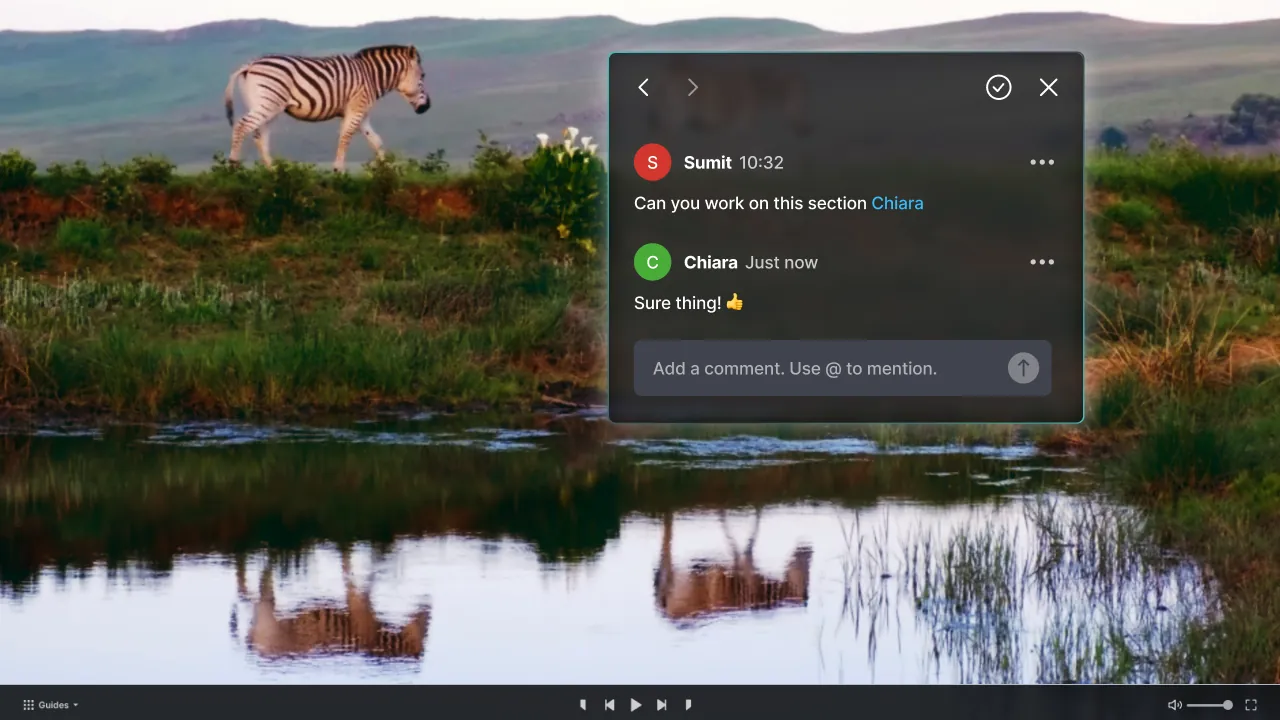
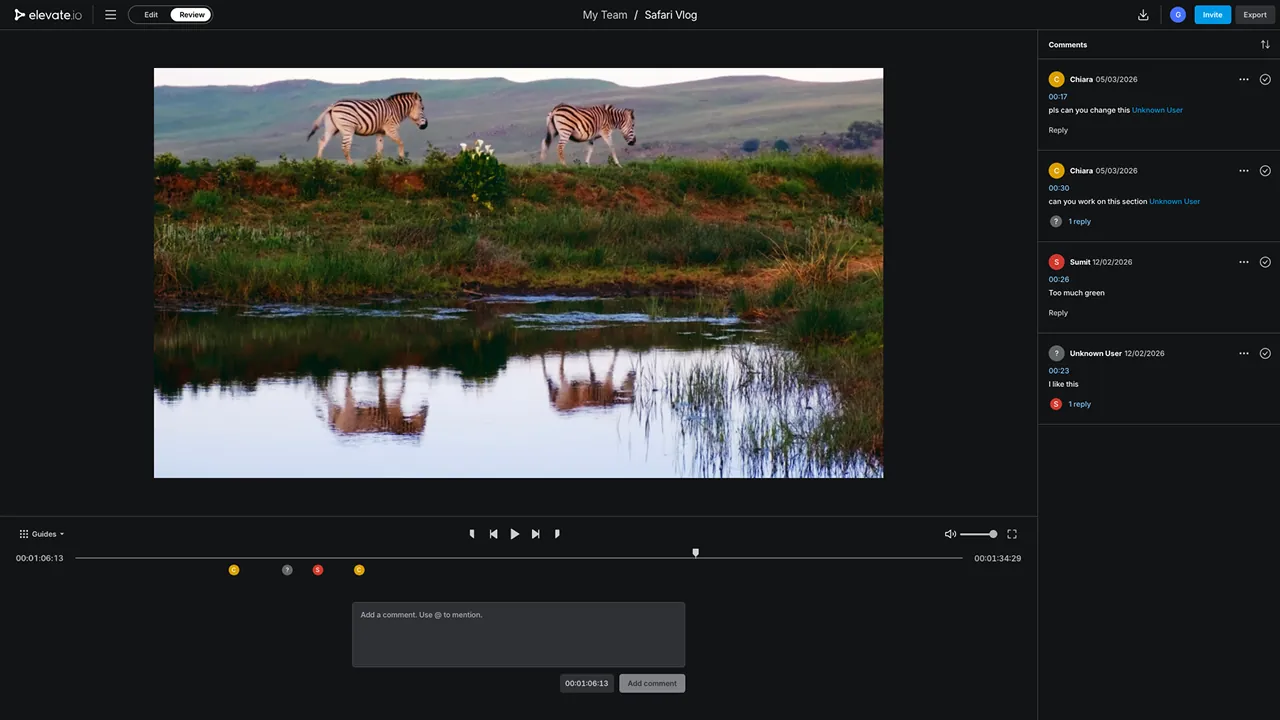
In elevate.io, reviewers access the edit through Review Mode, a clean player view that sits separate from the editing environment. They watch the video and leave comments that are automatically pinned to the exact frame they're referring to. There's no "around four minutes in." There's a comment attached to 3:52 that the editor can jump to immediately.
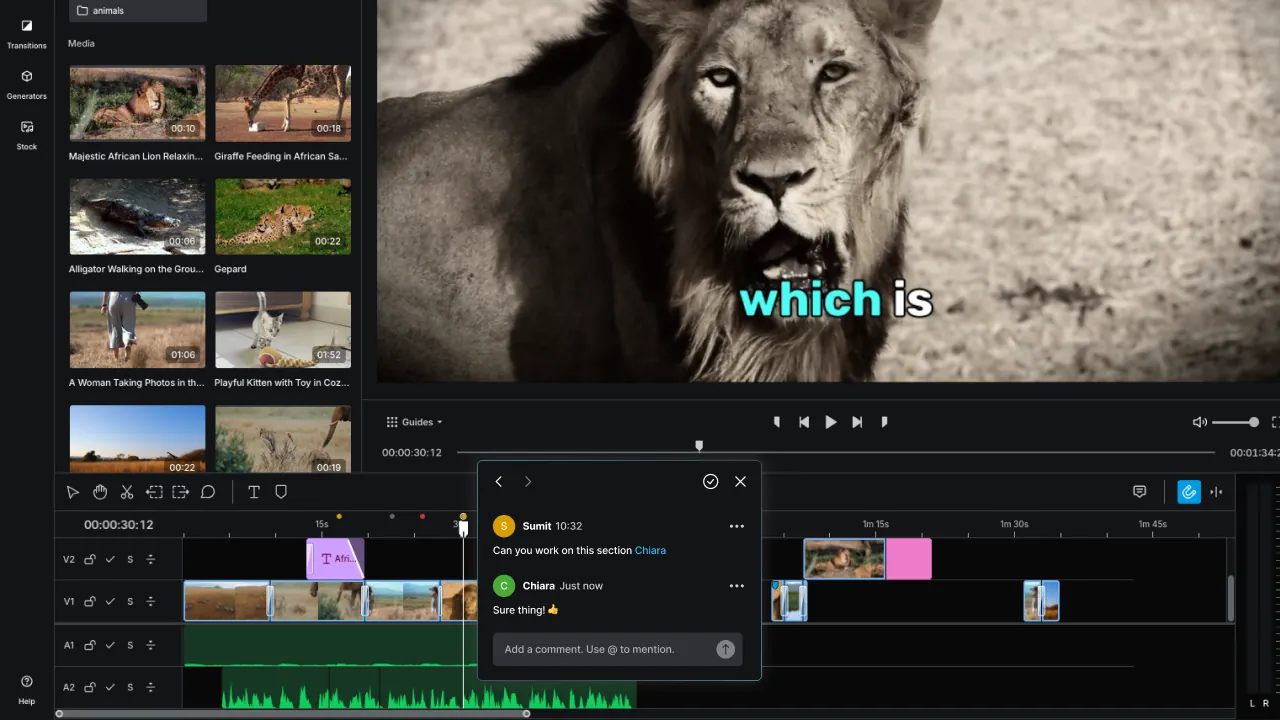
All comments from all reviewers appear on the editing timeline in the same workspace the editor is already working in. Nothing needs to be consolidated, copied, or forwarded. The editor sees every note, from every stakeholder, in one place and can action each one without leaving the project. The reviewer can even watch these changes happen in real-time.
The project lives under one permanent URL throughout the entire process. Every stakeholder who has access is always looking at the current version, automatically. There's no re-sharing after each round, no risk of someone reviewing an outdated cut, and no version confusion when sign-off finally lands.
For teams working with freelancers or external editors, the shared workspace means brand context, project files, and feedback history travel with the project rather than arriving piecemeal by email. The freelancer handoff risk that produces extra rounds doesn't disappear, but it's significantly reduced when everyone is working from the same environment from the start.
Frequently asked questions
How do you streamline client feedback for video revisions?
The most effective change is moving feedback from email and chat into a tool that pins comments to the exact timecode in the video. Vague notes generate slow revisions; precise notes get actioned in a single pass. Alongside that, establish who has final sign-off authority before the first cut goes out — not after three rounds of conflicting feedback have already arrived.
What are the best tools for managing video revisions in post-production?
Tools that centralise feedback and pin comments to specific moments in the video, cut the most time from the revision process. elevate.io's Review Mode puts timestamped comments from all stakeholders directly on the editing timeline, so the editor sees every note in one place without manually consolidating anything. Dedicated review platforms like Frame.io and PlayPause are worth considering for teams with more complex sign-off or formal approval record requirements.
How do you manage multiple rounds of video revisions without losing track?
The key is treating each round as a formal unit with a clear open and close. Before each round, confirm who is reviewing and what they're reviewing for. At the end of each round, get a written confirmation from the sign-off owner that the round is closed before the next cut is started. Without that discipline, rounds blur into each other, and feedback from a closed round resurfaces in a later one. A centralized review tool with a permanent project URL helps because everyone always sees the same version and there's no ambiguity about what's been reviewed and what hasn't.
Video projects can become chaotic very quickly if feedback lives in different places. Videos are downloaded, shared, edited, re-uploaded and edited with feedback; more feedback lands…and pretty soon no one knows which notes are final. Sign-off always feels like it’s “one more round away”.
This endless revision loop isn’t uncommon, and it’s not the team’s fault. Fix the tooling, and you can remove the frustration. Here’s how.
Why video revision spirals out of control
You’ve experienced this before. The first round of feedback arrives in an email. The second comes back as a voice note in Slack. A third stakeholder emails a few days later with notes that partially overlap or contradict the first two. The editor consolidates them into a new version, reshares, and two weeks later, the first stakeholder reopens something by mistake…
This loop isn’t caused by clients or editors, but by the way the feedback is structured.
When your feedback is spread across tools, it creates four opportunities for failure:
Vague timestamps: “That bit around the four-minute mark” isn’t exactly a precise reference. Editors/reviewers have to guess what the stakeholder is referring to, rewatch the section a few times, and hope they’ve identified the right moment. If they haven’t, another round begins.
Parallel threads: If multiple stakeholders leave notes in different places, it’s hard to form a complete picture. And if feedback only exists in one person’s inbox, there might be notes that never reach the editor. Or maybe there are notes that reach the editor, but not the client. Each thread creates a new round of feedback and revision.
Missed feedback: If notes are consolidated manually, things will inevitably slip through. Not because the person doing the work isn’t thorough, but because manually copying notes from different sources into a single document creates an opportunity for errors to slip through. Every missed note restarts the feedback loop.
No formal close: If sign-off is just the absence of further feedback and not positive (official) confirmation, nothing ever closes. Stakeholders who approved an edit informally can reopen it, because there is no record that approval even happened. The loop continues indefinitely.
The hidden cost of chaotic feedback
Every extra round of revisions has a direct impact on the editor’s time, the project manager’s time, and the opportunity cost of a video that hasn’t even shipped yet. There’s a hidden cost, too.
Freelancers and external editors working without a shared workspace lose context every time an edit is handed off. A new version of the brief arrives by email. The previous cut is somewhere in a shared folder (that may or may not be current). Brand guidelines were shared three months ago and may have been updated without anyone noticing. Every handoff under these conditions poses a briefing risk, and briefing risks produce mistakes that lead to revision rounds.
Internal teams aren’t immune either. Teams are under pressure to produce at greater speed in order to scale. More videos, with the same number of people, and the same fragmented review process, means slower outputs, which ultimately means the business isn’t scaling as it should.
A five-round review on a single video may feel manageable, but when you’re replicating that across twelve videos in a quarter, it won’t.
What a better revision process looks like
It doesn’t have to be that way. A well-run video revision process only needs three elements:
Feedback is precise. Every note is pinned to an exact moment in the video, not a rough description of a scene. The editor can see exactly what the note refers to, action it immediately, and mark it resolved.
Feedback is centralized. All notes from all stakeholders appear in one place. The editor doesn't consolidate anything manually. Everyone working on the project sees the same set of notes, in the same place, at the same time.
Sign-off is owned. There is one person or a clear group with formal authority to approve the final cut. That authority is established before review begins, not determined retrospectively when the video is already three rounds deep.
This is the difference between a review that closes in two rounds instead of six.
4 rules for fewer, faster revision rounds
1. Brief sign-off before feedback begins
Before the first cut goes out for review, establish in writing who has final sign-off authority. If multiple stakeholders need to weigh in, decide now how conflicts are resolved, e.g. by committee, by seniority, or by a single decision-maker. Without this, every stakeholder has effective veto power, which means rounds continue until everyone is happy rather than until the right person is happy.
2. Require timestamped feedback, not descriptions.
Vague feedback produces slow revisions. Ask reviewers to note the exact timecode their comment refers to, not the scene or the general section. When feedback is that specific, the editor can action it in minutes rather than hunting through the cut trying to identify what's being referred to. If you use a tool that pins comments to the timeline automatically, this problem disappears entirely (see the section below on how that works in practice).
3. Consolidate stakeholder notes before they reach the editor
If three people are reviewing, one person should collect all their notes and send a single consolidated document to the editor. The editor should never receive conflicting or partially overlapping feedback from multiple sources simultaneously. The project manager, producer, or account lead owns this task and not the editor or the stakeholders themselves.
4. Close rounds with a formal confirmation
Sign-off should be a positive act, not an absence of further feedback. At the end of each round, the sign-off owner confirms in writing (or in the review tool) that the round is closed. Anything raised after that point goes into the next round or is held until the following brief, unless it's a critical error. Without this discipline, rounds just go quiet until someone reopens them.
What this looks like in practice
The best free video review tool for giving feedback on edits solves the precision and centralization problems structurally, rather than relying on reviewers to write better notes or editors to consolidate manually.
In elevate.io, reviewers access the edit through Review Mode, a clean player view that sits separate from the editing environment. They watch the video and leave comments that are automatically pinned to the exact frame they're referring to. There's no "around four minutes in." There's a comment attached to 3:52 that the editor can jump to immediately.
All comments from all reviewers appear on the editing timeline in the same workspace the editor is already working in. Nothing needs to be consolidated, copied, or forwarded. The editor sees every note, from every stakeholder, in one place and can action each one without leaving the project. The reviewer can even watch these changes happen in real-time.
The project lives under one permanent URL throughout the entire process. Every stakeholder who has access is always looking at the current version, automatically. There's no re-sharing after each round, no risk of someone reviewing an outdated cut, and no version confusion when sign-off finally lands.
For teams working with freelancers or external editors, the shared workspace means brand context, project files, and feedback history travel with the project rather than arriving piecemeal by email. The freelancer handoff risk that produces extra rounds doesn't disappear, but it's significantly reduced when everyone is working from the same environment from the start.
Frequently asked questions
How do you streamline client feedback for video revisions?
The most effective change is moving feedback from email and chat into a tool that pins comments to the exact timecode in the video. Vague notes generate slow revisions; precise notes get actioned in a single pass. Alongside that, establish who has final sign-off authority before the first cut goes out — not after three rounds of conflicting feedback have already arrived.
What are the best tools for managing video revisions in post-production?
Tools that centralise feedback and pin comments to specific moments in the video, cut the most time from the revision process. elevate.io's Review Mode puts timestamped comments from all stakeholders directly on the editing timeline, so the editor sees every note in one place without manually consolidating anything. Dedicated review platforms like Frame.io and PlayPause are worth considering for teams with more complex sign-off or formal approval record requirements.
How do you manage multiple rounds of video revisions without losing track?
The key is treating each round as a formal unit with a clear open and close. Before each round, confirm who is reviewing and what they're reviewing for. At the end of each round, get a written confirmation from the sign-off owner that the round is closed before the next cut is started. Without that discipline, rounds blur into each other, and feedback from a closed round resurfaces in a later one. A centralized review tool with a permanent project URL helps because everyone always sees the same version and there's no ambiguity about what's been reviewed and what hasn't.